
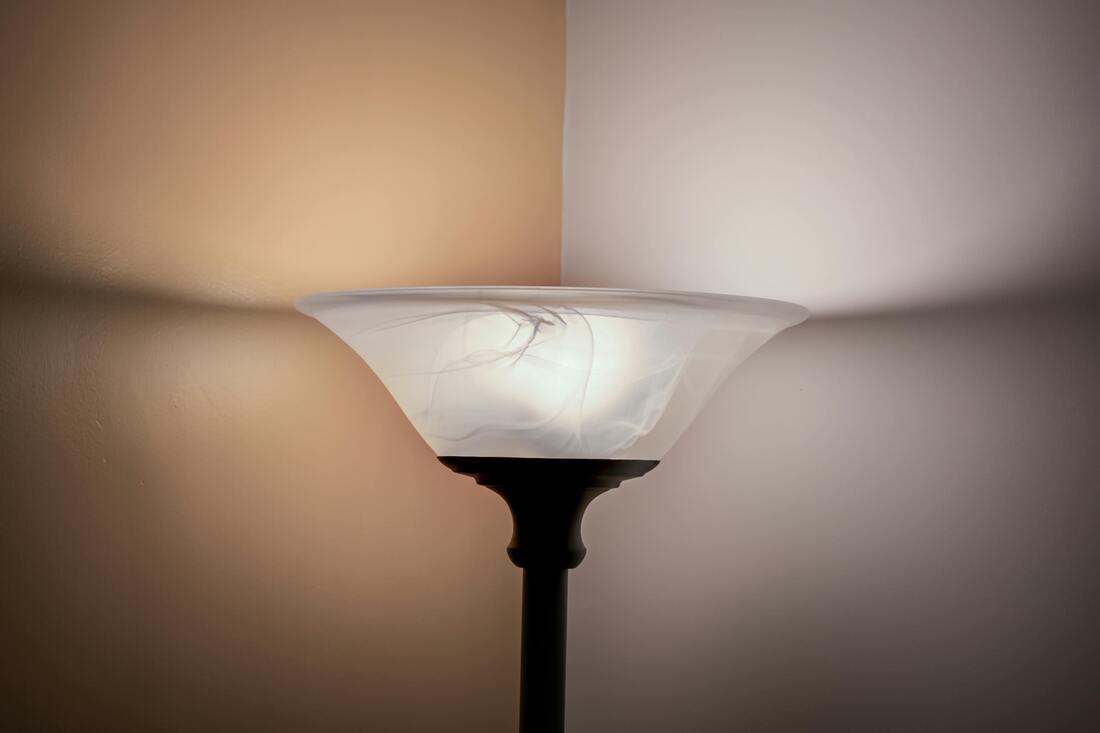
A floor lamp, also known as a standard lamp, is a light that stands on the floor, giving you light at or above your eyes. Usually, it has a base, a pole, a place for the light bulb, a lampshade, and a power cord.
🔦 Floor Lamp Parts
Part | What It Is | Good to Know
-----|----------|-----------
Base | The part at the bottom that keeps it from falling over. | A heavy base helps a lot. Usually made of metal, wood, or stone.
Pole/Body | The tall part that holds the bulb and shade. | Can be set at one height or changed.
Shade | Spreads out or points the light. | Can be made of fabric, glass, metal, paper, or plastic.
Bulb/Light | What makes the light. | Could be LED, incandescent, CFL, or halogen.
Switch | How you turn it on and off. | Can be a foot switch, a knob, a touch thing, or even controlled by your phone.
Cord & Plug | Gives the lamp power. | About 5–9 feet long, and some have clips to keep the cord tidy.
💡 Types of Floor Lamps
1. For the Whole Room
* Gives light all over the room.
* Traditional/Upright: The normal kind with a lampshade.
* Torchiere: Points light up to the ceiling.
* Column/Tower Lamp: A lamp that looks like a decoration.
2. For Close-Up Work
* Points light where you need it for reading or crafts.
* Reading Lamp: Bends near a chair or bed.
* Swing-Arm Lamp: The arm moves side to side or up and down.
* Arc Lamp: Reaches over chairs or tables.
3. To Make Things Look Nice
* Makes decorations stand out or sets a mood.
* Tripod Lamp: Stands on three legs and looks cool.
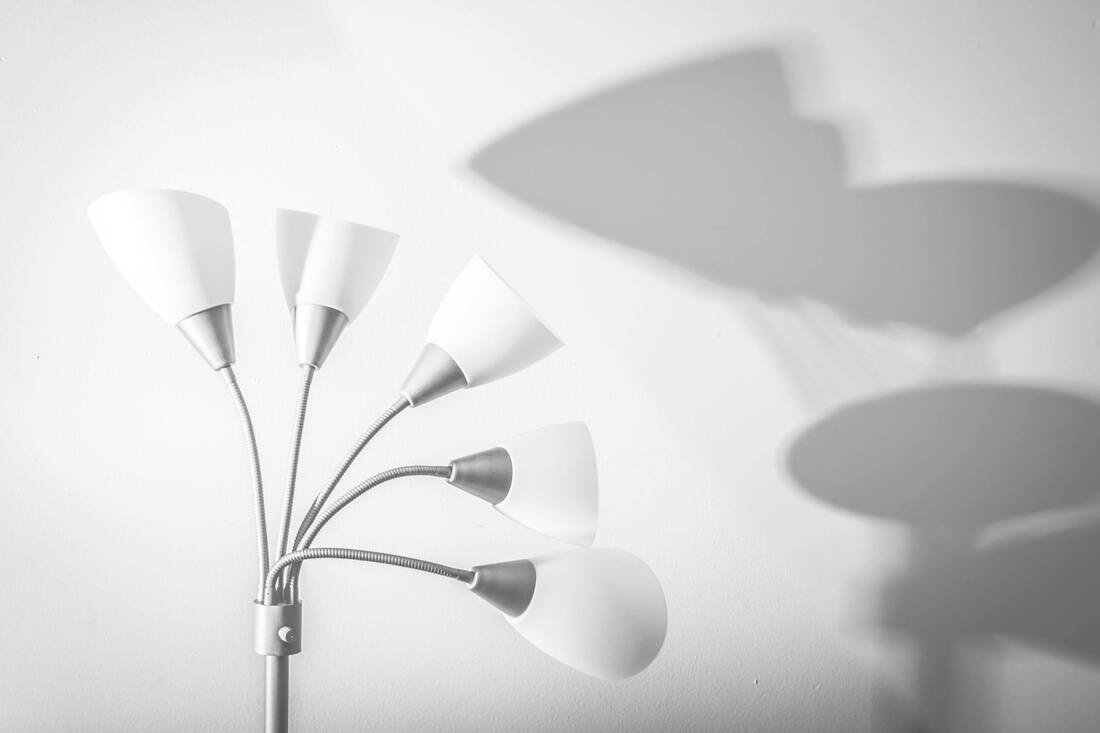
* Tree Lamp: Has a bunch of lights on branches.
* LED Strip/Color-Changing Lamps: Sets the vibe.
💡 What Kind of Light?
Bulb | Good | Not So Good | How Long It Lasts
-----|----------|-----------|----------------
LED | Saves energy, doesn't get hot, lasts forever | Costs more at first | 15,000–50,000 hours
CFL | Not bad on energy | Has mercury, takes a bit to get going | 8,000–10,000 hours
Halogen | Bright light | Gets hot, not energy-saving | 2,000–4,000 hours
Incandescent | Nice warm light, cheap | Wastes energy, doesn't last long | 750–1,200 hours
🎨 Styles & What They're Made Of
* Modern / Simple: Metal or clear plastic, straight lines.
* Industrial: Shows off the bulb, metal stuff.
* Retro: Brass or wood, round shapes.
* Country: Wood, cloth shades.
* Funky: Bright shades, different stuff put together.
* Stuff they're made of: steel, brass, aluminum, wood, glass, and fabric.
⚙️ How to Work It
* Normal Switch: Just a regular on/off thing or a knob to dim the light.
* Foot Switch: Step on it to turn it on. Good behind couches.
* Touch: Touch the metal to turn it on or dim it.
* Smart: Connects to your phone or voice assistant like Alexa.
* Remote: Change the light without getting up.
💡 Light Colors
Light | Color | How It Feels
-----|----------|-----------
Warm White | 2700–3000K | Cozy
Neutral White | 3500–4100K | Normal
Cool White | 5000–6500K | Like daylight
🏠 Where to Put It
* Living Room: Next to the couch for light.
* Bedroom: Next to the bed for reading. Use warm light.
* Office: Lights you can move around for the desk.
* Corners: Point a torchiere lamp at the ceiling to make the room seem bigger.
* Heads up: When you're sitting, the bottom of the lampshade should be about eye level (42–60 inches).
⚡ Be Safe
* Use the right kind of light bulb for the lamp.
* Make sure the base is stable, even on carpets.
* Don't cover the bulb with anything that could catch fire.
* Keep cords out of the way.
* If you have kids or pets, get a heavy base that won't tip over.
🧽 Keep It Clean
* Dust it with a cloth or vacuum.
* Clean shades (use a lint roller for fabric, soap for glass).
* Check the wires every year.
* Put in the right kind of new bulb.
♻️ Save Energy
* Use LED bulbs to save energy.
* Use timers to turn it off.
* Get lamps with parts you can replace to make them last longer.
🔧 What's Wrong?
Problem | Why | How to Fix
-----|----------|-----------
Flickering | Loose bulb or the bulb is dying | Tighten it or get a new one
Won't turn on | Switch is broken | Try a different outlet
Shade is crooked | Bent frame | Straighten it
Lamp leans | Uneven floor | Move it
🔦 Floor Lamp Parts
Part | What It Is | Good to Know
-----|----------|-----------
Base | The part at the bottom that keeps it from falling over. | A heavy base helps a lot. Usually made of metal, wood, or stone.
Pole/Body | The tall part that holds the bulb and shade. | Can be set at one height or changed.
Shade | Spreads out or points the light. | Can be made of fabric, glass, metal, paper, or plastic.
Bulb/Light | What makes the light. | Could be LED, incandescent, CFL, or halogen.
Switch | How you turn it on and off. | Can be a foot switch, a knob, a touch thing, or even controlled by your phone.
Cord & Plug | Gives the lamp power. | About 5–9 feet long, and some have clips to keep the cord tidy.
💡 Types of Floor Lamps
1. For the Whole Room
* Gives light all over the room.
* Traditional/Upright: The normal kind with a lampshade.
* Torchiere: Points light up to the ceiling.
* Column/Tower Lamp: A lamp that looks like a decoration.
2. For Close-Up Work
* Points light where you need it for reading or crafts.
* Reading Lamp: Bends near a chair or bed.
* Swing-Arm Lamp: The arm moves side to side or up and down.
* Arc Lamp: Reaches over chairs or tables.
3. To Make Things Look Nice
* Makes decorations stand out or sets a mood.
* Tripod Lamp: Stands on three legs and looks cool.
* Tree Lamp: Has a bunch of lights on branches.
* LED Strip/Color-Changing Lamps: Sets the vibe.
💡 What Kind of Light?
Bulb | Good | Not So Good | How Long It Lasts
-----|----------|-----------|----------------
LED | Saves energy, doesn't get hot, lasts forever | Costs more at first | 15,000–50,000 hours
CFL | Not bad on energy | Has mercury, takes a bit to get going | 8,000–10,000 hours
Halogen | Bright light | Gets hot, not energy-saving | 2,000–4,000 hours
Incandescent | Nice warm light, cheap | Wastes energy, doesn't last long | 750–1,200 hours
🎨 Styles & What They're Made Of
* Modern / Simple: Metal or clear plastic, straight lines.
* Industrial: Shows off the bulb, metal stuff.
* Retro: Brass or wood, round shapes.
* Country: Wood, cloth shades.
* Funky: Bright shades, different stuff put together.
* Stuff they're made of: steel, brass, aluminum, wood, glass, and fabric.
⚙️ How to Work It
* Normal Switch: Just a regular on/off thing or a knob to dim the light.
* Foot Switch: Step on it to turn it on. Good behind couches.
* Touch: Touch the metal to turn it on or dim it.
* Smart: Connects to your phone or voice assistant like Alexa.
* Remote: Change the light without getting up.
💡 Light Colors
Light | Color | How It Feels
-----|----------|-----------
Warm White | 2700–3000K | Cozy
Neutral White | 3500–4100K | Normal
Cool White | 5000–6500K | Like daylight
🏠 Where to Put It
* Living Room: Next to the couch for light.
* Bedroom: Next to the bed for reading. Use warm light.
* Office: Lights you can move around for the desk.
* Corners: Point a torchiere lamp at the ceiling to make the room seem bigger.
* Heads up: When you're sitting, the bottom of the lampshade should be about eye level (42–60 inches).
⚡ Be Safe
* Use the right kind of light bulb for the lamp.
* Make sure the base is stable, even on carpets.
* Don't cover the bulb with anything that could catch fire.
* Keep cords out of the way.
* If you have kids or pets, get a heavy base that won't tip over.
🧽 Keep It Clean
* Dust it with a cloth or vacuum.
* Clean shades (use a lint roller for fabric, soap for glass).
* Check the wires every year.
* Put in the right kind of new bulb.
♻️ Save Energy
* Use LED bulbs to save energy.
* Use timers to turn it off.
* Get lamps with parts you can replace to make them last longer.
🔧 What's Wrong?
Problem | Why | How to Fix
-----|----------|-----------
Flickering | Loose bulb or the bulb is dying | Tighten it or get a new one
Won't turn on | Switch is broken | Try a different outlet
Shade is crooked | Bent frame | Straighten it
Lamp leans | Uneven floor | Move it
**1. A Quick Look at Floor Lamp History**
Back in the 1600s and 1700s, people used oil and candle stands as early floor lamps. These were common in living rooms.
When electricity became a thing in the early 1900s, electric floor lamps popped up.
Then, the Art Deco era (1920s-30s) and Mid-century Modern times (1950s-60s) brought us cool, decorative lamp designs.
Now, in the 2000s, LEDs and smart controls have made floor lamps way more energy-saving and adaptable.
**2. All About the Electricity and Light Stuff**
**A. Basic Electric Info**
Here's a simple chart:
| Component | What It Is |
| :------------- | :-------------------------------------------------- |
| Voltage | Standard household power. |
| Wattage | How much power it uses; affects light and heat. |
| Current (Amps) | Not much current is used. |
| Switch Type | Just your basic on/off switch. |
**Safety tip:** Always unplug the lamp before you mess with the bulb or clean it. And don't go over the max wattage on the socket!
**B. How Bright and Efficient?**
Think lumens for brightness, not watts.
* 450 lumens is about the same as a 40W old-school bulb.
* 800 lumens is like a 60W bulb.
* 1600 lumens is similar to a 100W bulb.
Lumens per watt (lm/W) shows you how efficient it is:
* Old bulbs: About 15 lm/W
* CFL bulbs: Around 60 lm/W
* LEDs: Around 90–120 lm/W
**For example:** A 10W LED floor lamp can be as bright as a 60W old bulb, but it uses way less power.
**C. Where the Light Goes**
* All around (lampshade spreads the light): Great for general room lighting.
* One direction (like a spotlight): Great for reading or pointing at something.
* Bouncing off the ceiling: Makes a soft, gentle light.
**D. How Colors Look**
CRI tells you how real the colors look under the light (on a scale of 0-100).
* 80+ CRI = Colors look alright (standard LED)
* 90+ CRI = Colors look great (for art, photos, makeup)
**3. Making it Comfortable: Placement Tips**
Here's a quick guide:
| What It's For | Height to the Top of the Lamp | Light | Where to Put It |
| :-------------------------- | :--------------------------------------------- | :-------------------- | :--------------------------------------------------- |
| Reading by your seat | Around 58–64 inches | Pointed or adjustable | A bit behind you, so it doesn't shine in your eyes |
| General living room light | Around 60–72 inches | Soft or up-lighting | Near corners to bounce light off the walls |
| Bedroom | Around 48–60 inches | Soft, warm light | On the side opposite your bed |
| Desk/work light | Around 50–70 inches | Bright, white light | Use a bendy arm or a focused light |
**4.Picking Out a Floor Lamp**
**A. What You Need It For**
* **Reading:** Adjustable arm, bright enough, and a comfy color.
* **Living Room Vibe:** Up-lighting or shaded, good brightness.
* **Cool Look:** Multi-light, color-changing, or a unique base.
* **Work area:** LEDs that show colors well, not too bright, and the right color.
**B. Room Size**
| Room | How Bright? |
| :---------------------- | :------------- |
| Small Bedroom | Not too bright |
| Medium Living Room | medium bright |
| Big, Open Living Space | Really Bright |
**5. Doing It Yourself and Keeping It Up**
**A. Changing a Bulb**
1. Unplug the lamp.
2. Let the bulb cool down.
3. Take out the old bulb; clean up the socket.
4. Put in a new bulb that's the same type and wattage.
**B. What Kind of Socket?**
| Socket Type | What Bulbs Fit |
| :----------------- | :------------------ |
| Regular Screw Type | Most bulbs |
| Twist and Lock | Special twist bulbs |
| LED built in | Can't change bulb |
**C. Fixing the Wires or Switch**
If the lamp won't turn on, but the bulb is okay:
1. Check the cord for damage.
2. Open the base or socket (unplugged, of course).
3. Swap out the switch or cord with the same kind.
**Important:** If you're not sure about any of this, get an electrician to help.
**6. Making It Look Good**
**A. Simple visual trick**
* The height should be about the same as something else nearby (like a tall bookcase).
* The lampshade width should be about a third to half the lamp's height.
**B. Lighting Layers**
Have:
* General room lighting (ceiling or up-lighting floor lamp)
* Reading light
* Lights to show off art
**C. Colors**
* Warm metals = cozy.
* Cool metals = modern.
* Wood = natural.
**7. Cool Modern Features**
| Feature | What It Does |
| :---------------------- | :------------------------------------------------------------------------- |
| Smart Bulbs | Connect to your phone; control brightness, color, and when they turn on. |
| Voice Control | Works with Alexa, Google, etc. |
| Dimming | Dims without flickering. |
| Color-Changing LEDs | Change the color for different moods. |
| Sensors | Turns on when someone walks in the room or when it gets dark. |
| Battery Power | No cords needed, move them wherever. |
**8. Being Eco-Friendly**
* Pick LEDs or solar lamps.
* Get lamps where you can replace parts instead of throwing the whole thing away.
* Look for certifications.
* Materials like bamboo or recycled metal are a good choice.
**9. Fixing Problems**
| Problem | Why | What to Do |
| :-------------------- | :---------------------------------------- | :---------------------------------------- |
| Won't turn on | Bulb's dead or plug/switch isn't working | Change bulb or check the plug |
| Flickering | Bulb or wires are loose | Tighten the bulb; look at the wiring |
| Not very bright | Wrong bulb or dirty shade | Replace bulb; clean the shade |
| Shade gets hot | Bulb's too strong | Use a weaker LED |
| Leans to one side | Not level or something's loose | Fix the surface or tighten things up |
| Buzzing sound | Something wrong with the dimmer | Get a new dimmer |
Back in the 1600s and 1700s, people used oil and candle stands as early floor lamps. These were common in living rooms.
When electricity became a thing in the early 1900s, electric floor lamps popped up.
Then, the Art Deco era (1920s-30s) and Mid-century Modern times (1950s-60s) brought us cool, decorative lamp designs.
Now, in the 2000s, LEDs and smart controls have made floor lamps way more energy-saving and adaptable.
**2. All About the Electricity and Light Stuff**
**A. Basic Electric Info**
Here's a simple chart:
| Component | What It Is |
| :------------- | :-------------------------------------------------- |
| Voltage | Standard household power. |
| Wattage | How much power it uses; affects light and heat. |
| Current (Amps) | Not much current is used. |
| Switch Type | Just your basic on/off switch. |
**Safety tip:** Always unplug the lamp before you mess with the bulb or clean it. And don't go over the max wattage on the socket!
**B. How Bright and Efficient?**
Think lumens for brightness, not watts.
* 450 lumens is about the same as a 40W old-school bulb.
* 800 lumens is like a 60W bulb.
* 1600 lumens is similar to a 100W bulb.
Lumens per watt (lm/W) shows you how efficient it is:
* Old bulbs: About 15 lm/W
* CFL bulbs: Around 60 lm/W
* LEDs: Around 90–120 lm/W
**For example:** A 10W LED floor lamp can be as bright as a 60W old bulb, but it uses way less power.
**C. Where the Light Goes**
* All around (lampshade spreads the light): Great for general room lighting.
* One direction (like a spotlight): Great for reading or pointing at something.
* Bouncing off the ceiling: Makes a soft, gentle light.
**D. How Colors Look**
CRI tells you how real the colors look under the light (on a scale of 0-100).
* 80+ CRI = Colors look alright (standard LED)
* 90+ CRI = Colors look great (for art, photos, makeup)
**3. Making it Comfortable: Placement Tips**
Here's a quick guide:
| What It's For | Height to the Top of the Lamp | Light | Where to Put It |
| :-------------------------- | :--------------------------------------------- | :-------------------- | :--------------------------------------------------- |
| Reading by your seat | Around 58–64 inches | Pointed or adjustable | A bit behind you, so it doesn't shine in your eyes |
| General living room light | Around 60–72 inches | Soft or up-lighting | Near corners to bounce light off the walls |
| Bedroom | Around 48–60 inches | Soft, warm light | On the side opposite your bed |
| Desk/work light | Around 50–70 inches | Bright, white light | Use a bendy arm or a focused light |
**4.Picking Out a Floor Lamp**
**A. What You Need It For**
* **Reading:** Adjustable arm, bright enough, and a comfy color.
* **Living Room Vibe:** Up-lighting or shaded, good brightness.
* **Cool Look:** Multi-light, color-changing, or a unique base.
* **Work area:** LEDs that show colors well, not too bright, and the right color.
**B. Room Size**
| Room | How Bright? |
| :---------------------- | :------------- |
| Small Bedroom | Not too bright |
| Medium Living Room | medium bright |
| Big, Open Living Space | Really Bright |
**5. Doing It Yourself and Keeping It Up**
**A. Changing a Bulb**
1. Unplug the lamp.
2. Let the bulb cool down.
3. Take out the old bulb; clean up the socket.
4. Put in a new bulb that's the same type and wattage.
**B. What Kind of Socket?**
| Socket Type | What Bulbs Fit |
| :----------------- | :------------------ |
| Regular Screw Type | Most bulbs |
| Twist and Lock | Special twist bulbs |
| LED built in | Can't change bulb |
**C. Fixing the Wires or Switch**
If the lamp won't turn on, but the bulb is okay:
1. Check the cord for damage.
2. Open the base or socket (unplugged, of course).
3. Swap out the switch or cord with the same kind.
**Important:** If you're not sure about any of this, get an electrician to help.
**6. Making It Look Good**
**A. Simple visual trick**
* The height should be about the same as something else nearby (like a tall bookcase).
* The lampshade width should be about a third to half the lamp's height.
**B. Lighting Layers**
Have:
* General room lighting (ceiling or up-lighting floor lamp)
* Reading light
* Lights to show off art
**C. Colors**
* Warm metals = cozy.
* Cool metals = modern.
* Wood = natural.
**7. Cool Modern Features**
| Feature | What It Does |
| :---------------------- | :------------------------------------------------------------------------- |
| Smart Bulbs | Connect to your phone; control brightness, color, and when they turn on. |
| Voice Control | Works with Alexa, Google, etc. |
| Dimming | Dims without flickering. |
| Color-Changing LEDs | Change the color for different moods. |
| Sensors | Turns on when someone walks in the room or when it gets dark. |
| Battery Power | No cords needed, move them wherever. |
**8. Being Eco-Friendly**
* Pick LEDs or solar lamps.
* Get lamps where you can replace parts instead of throwing the whole thing away.
* Look for certifications.
* Materials like bamboo or recycled metal are a good choice.
**9. Fixing Problems**
| Problem | Why | What to Do |
| :-------------------- | :---------------------------------------- | :---------------------------------------- |
| Won't turn on | Bulb's dead or plug/switch isn't working | Change bulb or check the plug |
| Flickering | Bulb or wires are loose | Tighten the bulb; look at the wiring |
| Not very bright | Wrong bulb or dirty shade | Replace bulb; clean the shade |
| Shade gets hot | Bulb's too strong | Use a weaker LED |
| Leans to one side | Not level or something's loose | Fix the surface or tighten things up |
| Buzzing sound | Something wrong with the dimmer | Get a new dimmer |